


By Jean Luc Cabirol
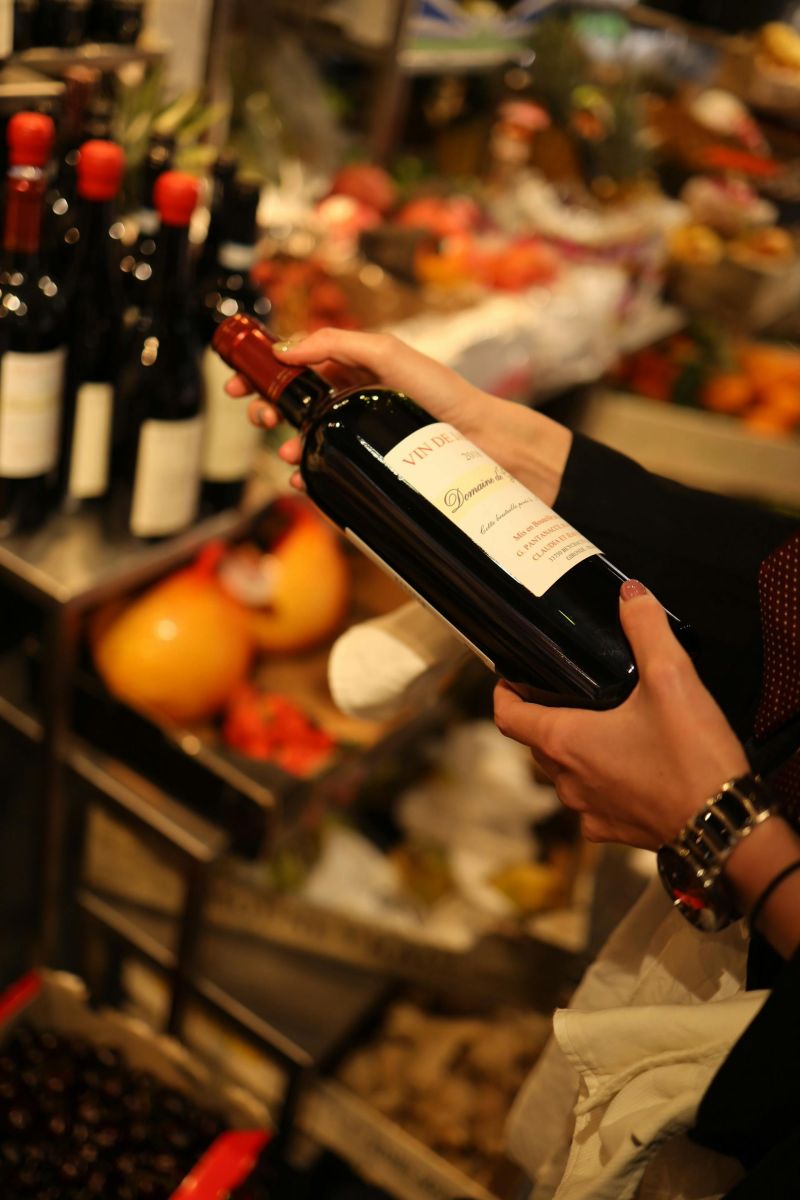
When coming across large offers of wines, it seems essential to try and understand what labels stuck on bottles mean. But most of the time, far from giving us insights on what we need to decide to buy a bottle, they confuse us more. Legal indications on the origin of the product, content, and producer …are coming in different ways. To understand what is really inside of the bottle, here are some useful clues:
|
|
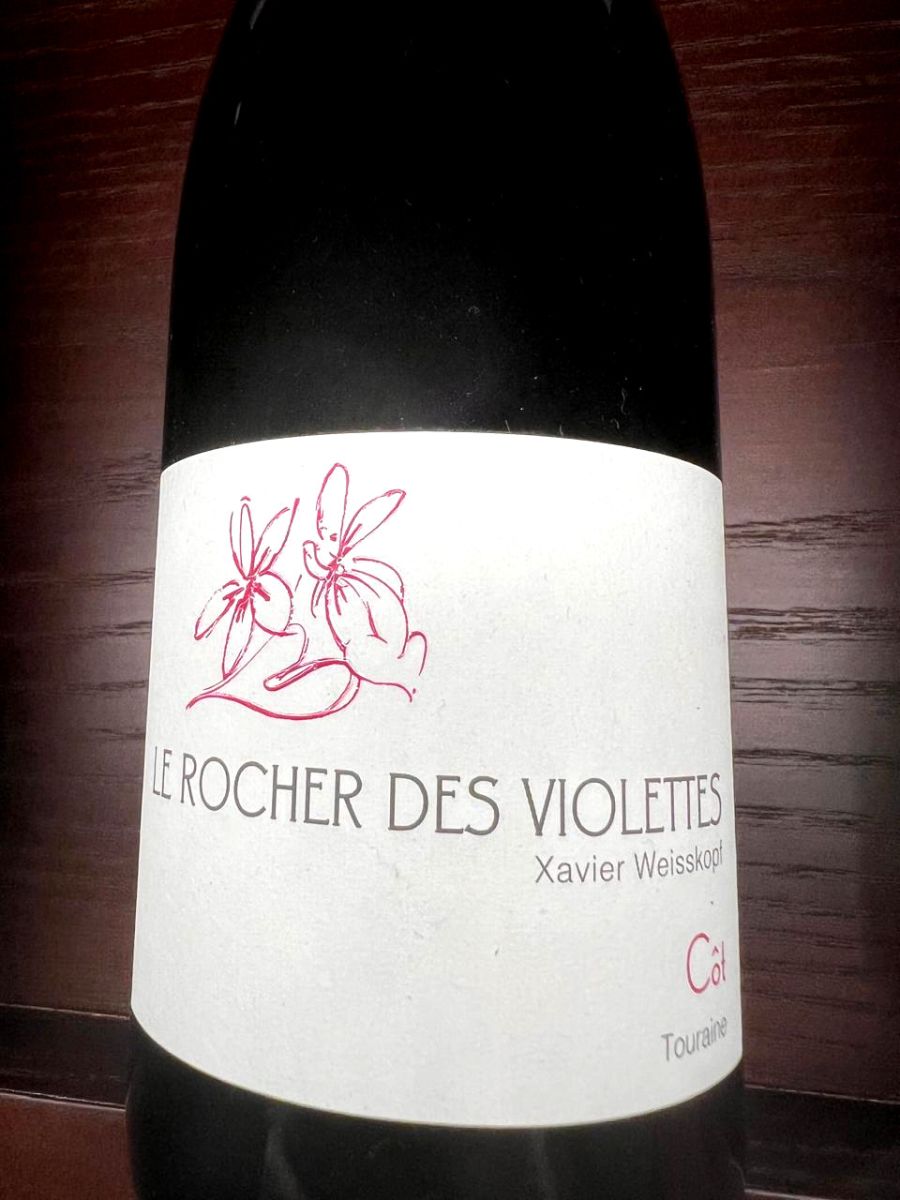
NAME OF THE WINE
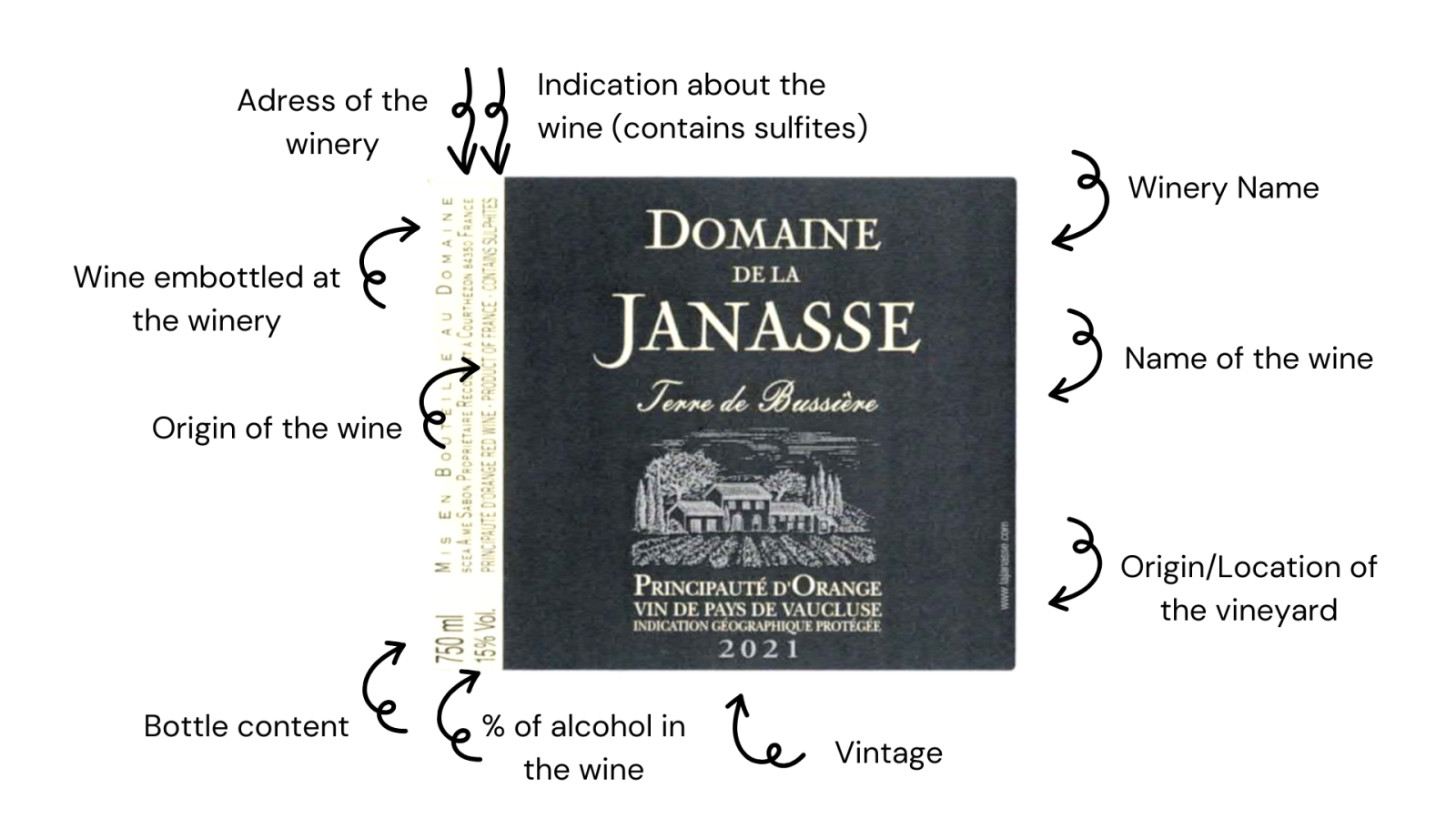
Referring only to French wines, the front label displays information on:
- The commercial name of the wine
- Sometimes the location of the vineyard and the grapes used to produce the wine.
ORIGIN
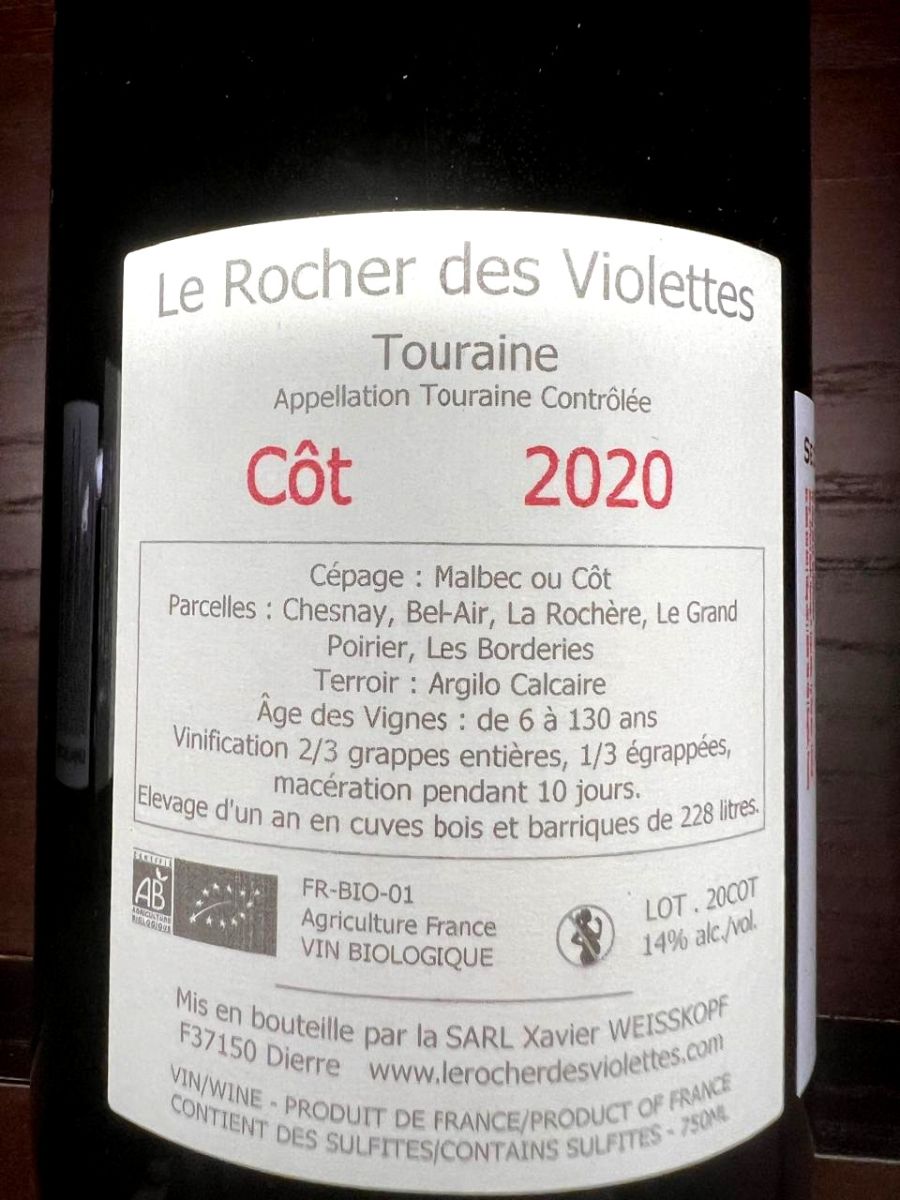
In France, we find mostly VDF (Vin de France or French origin wine), and AOP/AOC wines which is an indication of the level of the wine and the origin.
A VDF is not necessarily a lower-quality wine. Most of those wines produced outside of the AOC/AOP areas by excellent producers are very good quality for the price items.
VINTAGE
Most wines in France are vintage wines which gives an indication of the quality based on the harvest quality in that year and area. Some exceptions like blends or sparkling/champagne wines which are no vintage for most of them but can be of excellent quality.
|
|
WINEMAKER
This is an important indication as in the same area quality is not always consistent and some wineries are technically more advanced. Big names always produce consistent quality. Small wineries using less advanced production equipment might deliver exceptional but also average quality. However, some small winemakers using exceptional skills always deliver excellent wines.
CONTENT
This refers to the grapes used to make the wines. Following the local regulation allows the wineries to claim the AOP/AOC label. Some regions do not allow to blend grapes, or in definite proportions, some do. Each type of grape will bring a specific taste to the wine. Grenache or Merlot will bring fruit and roundness. Syrah and Cabernet Sauvignon have a nice mineral backbone with a little acidity allowing a better aging of the wine. We will post in the future a summary of the specific flavors of the major grapes found in France.
SPECIFIC INFORMATION
Most of them will relate to the content of sulfites, and the way of aging (for example aging in wooden barrels or amphora….).
LABEL DESIGN
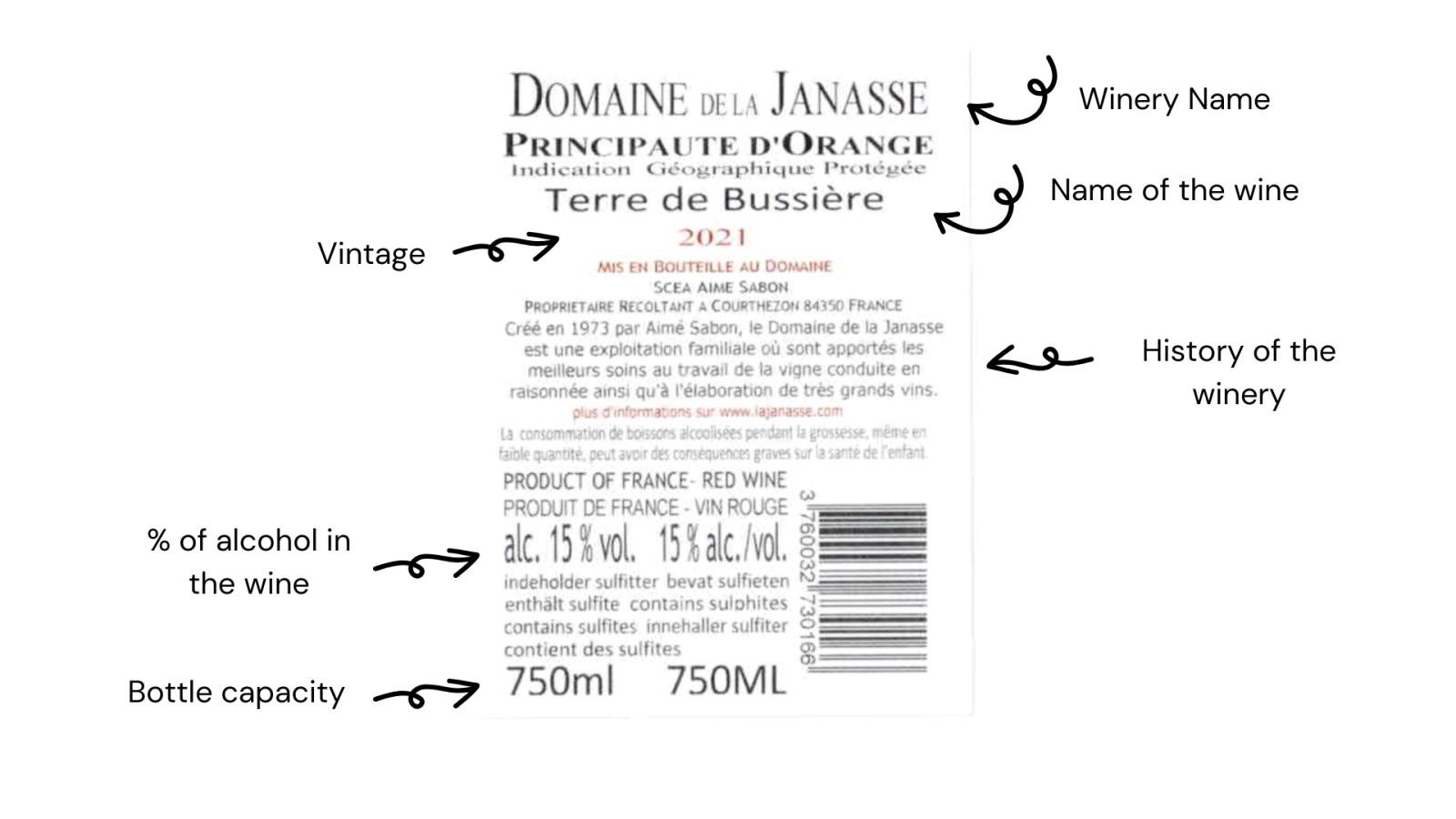
The design of the label also leads us to understand the spirit of the producer (traditional labels tend to make us understand that the producer leans on the classic side, very modern designs that the producer might be technically more updated …). There is no specific regulation on wine labels. Counter labels usually deliver more information about the wines.