


True symphony for senses, Burgundy wine has long been associated with grace and elegance. With roots in antiquity, the region has a fascinating and lengthy history well known for its vines cultivated for centuries on the undulating hills of Burgundy with distinctive terroir, utilizing superior grape varieties and ancestral knowledge.
A vast vineyard made up of sizable areas
The wine region of Burgundy spans almost 230 kilometers, from Auxerre to Mâcon, and represents 28,715 hectares, or 3% of the French vineyard. The area is separated into six wine-growing regions with highly different characteristics:
Chablis and Grand Auxerrois
Châtillonnais
Côte de Nuits and Haute Côte de Nuits
Côte de Beaune and Hautes
Côtes de Beaune
Côte Chalonnaise and Couchois
Mâconnais
The terroir of Burgundy –A perfect geological situation
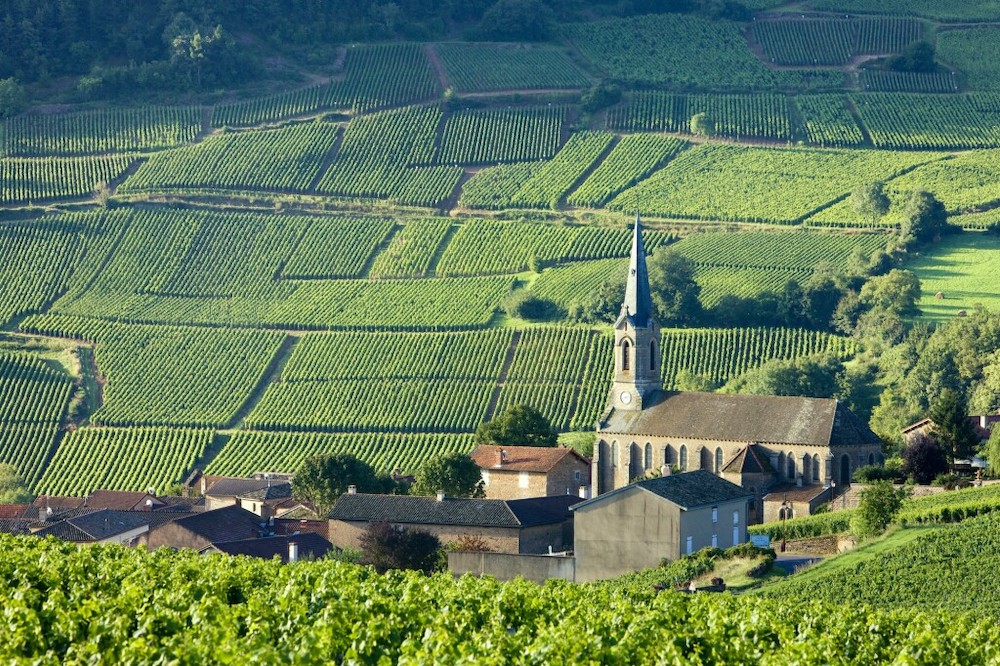
The quality of Burgundy's wines is greatly influenced by its limestone and clay-limestone soils. For the Burgundy terroir, geological composition varies from one locality to another, affecting the wines' minerality, texture, and aromas. A warm, shallow sea covered the area 250 million years ago, with limestone holding water controlling the earth's temperature and leaving behind some soil rich in marl and limestone, perfect for growing vines producing mineral wines.
Climate Variability in Burgundy
The 230-kilometer-long Burgundy vineyard enjoys a climate that is especially conducive to vine cultivation. The area has a semi-continental climate with oceanic influences that result in hot, sunny summers ideal for grape ripening, cold winters necessary to induce dormancy in the vine and ensure its longevity, moderate rainfall distributed fairly evenly throughout the year giving the vines a steady supply of water, and notable day-to-night temperature variations affecting the development of aromas and the concentration of sugars in the grapes.
An ideal geographical situation
Burgundy enjoys favorable geographic conditions due to its central location on the French and European axis. Located just one hour from Lyon and two hours from Paris, the Burgundy vineyard is located near important French towns and so European capitals. To go from the south to the north of Europe, you had to travel through Burgundy. These same routes served to meet the growing demand for slaves, gold, and iron, all transported along the Rhône, the Saône, the Moselle, the Rhine, and the Danube, which were privileged transport routes, as did the Alpine passes, allowing this region to communicate with Italy.
From the ancient era
Although vines have been in Burgundy for a very long time, it is still unknown when the Burgundian vineyard was first established.
We know that Burgundy was already well-known for the caliber of its wines by the fourth century AD, in a speech devoted to the splendor of Emperor Constantine Augustus in 312 by Eumenes, a distinguished orator and president of the University of Autun. As of right now, this document is the first written record of the Burgundian terroir since the Gallo-Roman period.
Others think that the Celts, who visited Italy and Greece already in the fifth century BC, found this beverage and then brought vine cultivation and winemaking back to Burgundy. The Celtic tribe's capital at the time was Bibracte, located on Mont Beuvray. The remains of hundreds of thousands of Italian amphorae from the second or first century BC have been found there during archeological excavations. Archaeological excavations on the Celtic tombs of the Prince of Lavau in Champagne near Troyes (500 BC) and the Princess of Vix in Burgundy (dated 470 BC-460 BC) revealed large bronze cauldrons where wine was mixed with various herbs and water—in keeping with the "civilized" consumption practiced in the Mediterranean world—as well as oinochoes, Greek jugs with painted decoration used to draw and distribute wine, gold and silver strainers used to filter the beverage, and wine goblets. All of these items and the practice of the Mediterranean banquet (symposium) represent a cross-cultural exchange and important trade between northern Europe and the Mediterranean region, which traveled through Burgundy along the Seine Valley, a route for wine, tin, iron, amber, and slaves. Then, with time, the cult of Bacchus would have grown, wine would have taken the place of Celtic beer, and the Gallic invention of the barrel would have replaced amphorae.
Wine tasting in the Middle Ages
The Vineyard's Ascent in the Middle Ages
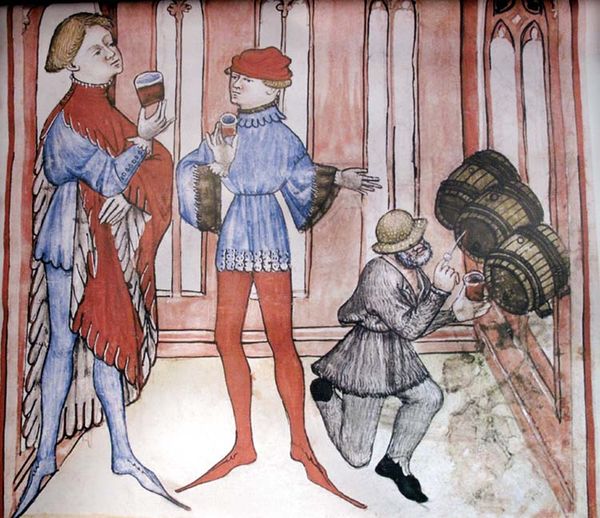
The Burgundian vineyard flourished during the Middle Ages. The vineyards were then owned exclusively by the religious and aristocratic classes. Through the monasteries that owned large vineyards, the Catholic Church played a significant role in its development. The monks used their expertise to cultivate vines around their abbeys and develop new winemaking techniques, such as comparative tastings, pruning, taking cuttings, grafting, and studies on the best strains.
The Burgundian vineyard grew as a result of the expansion of vine cultivation and especially by two monastic orders, the Abbeys of Cîteaux and Cluny in Burgundy. The idea of "Climat"- small, carefully defined land parcels that are unique in their microclimate, geography, soil, and grape variety - was the monks' greatest contribution to the wine industry. Through monks’ efforts, wine served at kings’ and popes’ tables came to represent hospitality and distinction. Today, the French wine-growing terroir system - in which each geographical region produces its own wine- is thought to have originated in the "Climats" of Burgundy.
The Burgundian Golden Age
The 14th and 15th centuries saw the height of Burgundy's wine production under the Dukes of Valois dynasty. By marrying Margaret of Flanders at the end of the 14th century, Philip of Valois, the first Duke of Burgundy, doubled its territory by adding Flanders. As ardent wine enthusiasts, they helped together to build the reputation of Burgundy wines, which were then referred to as Beaune wines, by bringing international recognition to the wine-growing region and enforcing stringent production regulations that promoted the production of high-quality wines. Burgundy, the birthplace of the "most famous wine in the world" at the time, developed into a strong, prosperous state became totally independent of the Kingdom of France between the end of the 14th and the end of the following centuries.
From Nobility to Revolution
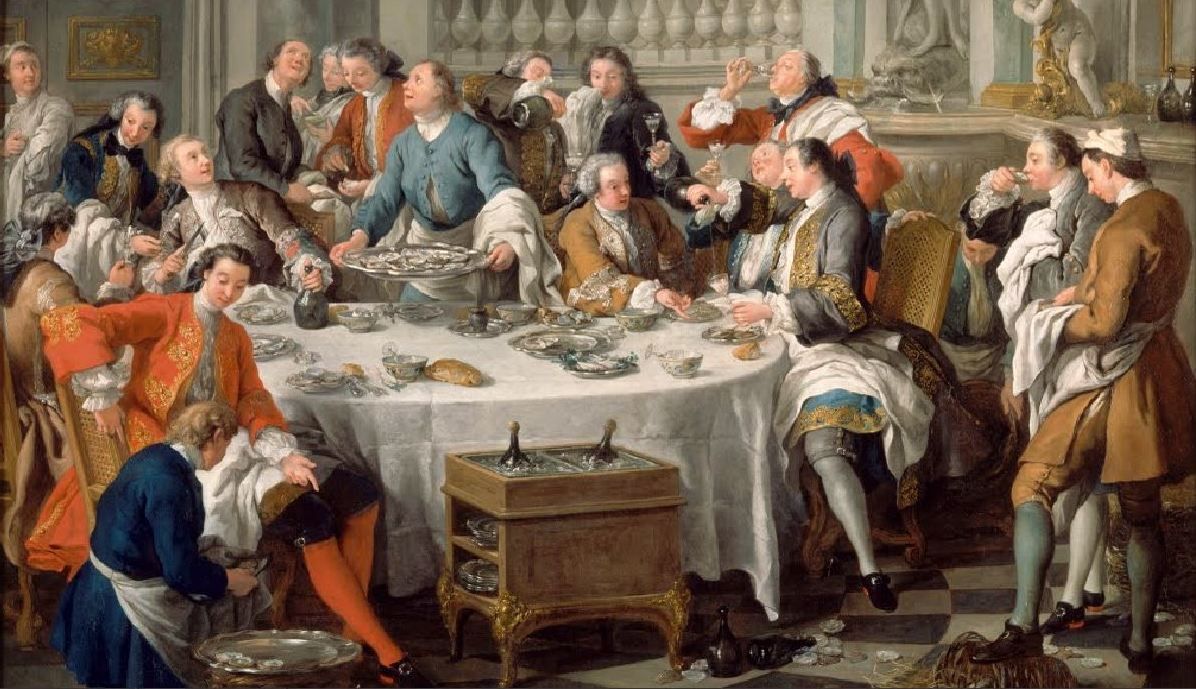
Burgundy wines were recognized as exceptional in every way during the 17th and 18th centuries. Physicians began to admit their health benefits during Louis XIV's reign. They gained their popularity through literature during the Age of Enlightenment while benefiting from the expansion of the road system, facilitating trade with Paris and via Europe's major ports, and so the rest of the world.
Gradually, trade became more structured, and the first wineries were founded in Beaune, then in Nuits-Saint-Georges. In the cellars, wines were kept and given new proper attention (new barrels, racking, aging), and the invention of wine bottles in 1750 helped in the expansion of the production of wines that could age longer.
The reputation of these excellent wines spread across the Atlantic Ocean in 1787 when the future president of the United States, Thomas Jefferson, who was then the ambassador of the United States to France, paid a visit to the vineyards of Burgundy that year. He created there a hierarchy of vintages and gave the first description made by a foreign author. Even now, this hierarchy is still in place. He also influenced the opening of the White House cellar to Burgundian wines and today United States is still the biggest consumer of Burgundy wines.
1789: During the French Revolution, a general dismantling of estates was mandated. The State seized the French aristocracy and religious properties and put them up for auction as national property. The Burgundy’s winegrowing landscape became then altered by the division of its vast estates sold to farmers. A troubled period followed, as the peasants, lacking the ancestral knowledge of the monks, produced low-quality wine they did not know how to sell.
The 19th Century: The Rise of Burgundian wine
The growth of Burgundy wines during the XIX century was directly correlated with advancements in free trade and transportation, the 19th century Second Empire's free trade agreements with Germany, Belgium, Holland, and Great Britain, as well as the construction of the railway between Paris and Dijon in 1851 and the opening of the Burgundy Canal in 1832.
However, vineyards were struck by an unprecedented crisis at a time when Burgundy wines were experiencing tremendous success. Vineyards were overrun by the vine-declining insect Phylloxera starting in 1878. Arriving from the other side of the Atlantic, this "black disease" drastically and almost completely killed vineyards and, in turn, the wine production. Faced with the ineffectiveness of insecticides, French winegrowers adopted a new solution in 1888: grafting American vines that were naturally resistant to Phylloxera with French plants without compromising the wines' quality.
Burgundy Wines' Innovations and Excellence
At the start of the twentieth century, the First World War, American Prohibition, and the economic crisis all temporarily slowed the success of Burgundian wines until the end of World War II. During the 1929 financial crisis, the idea of certifying the quality of Burgundian wines to increase sales took concrete form, intending to authenticate, conserve knowledge, and strengthening consumer protection against fraud. In 1935, Appellations d'Origine Controlée (AOC) and then cooperatives were established.
Worldwide Renown
Burgundy wines are now well-known throughout the world. Some of the best and most sought-after Burgundy vintages worldwide are produced in the charming vineyards of the Côte de Beaune and the Côte de Nuits. International sales account for over half of Burgundy wine production and the US leads the list of popular destinations (20%), followed by the UK (16%), Canada (9%), Belgium (8%), and Japan (8%).
To craft the finest Burgundy Vintages, winemakers have continually innovated and improved over the centuries. It is a tale of tradition, skill, and passion handed down through generations. From yesterday's traditional growing techniques to today's and tomorrow's cutting-edge viticultural practices, the dedication to quality has never wavered and will never do.